Your Lynn basement keeps flooding after heavy rain because water is reaching the foundation faster than the soil, gutters, drains, or sump system can carry it away. The most common causes are poor surface drainage, clogged or undersized gutters, foundation cracks, a failed sump pump, and saturated ground that pushes water through floor joints or porous masonry.
Rain that appears in the same corner after each storm is a clue: the entry point or drainage problem is recurring, not a one-time spill. Below, we explain what causes basement water in Lynn MA, what you can check safely, how to limit damage, and when water removal is the right next step.
Why Lynn Basements Flood After Heavy Rain is a local water-damage guide that explains the drainage and foundation conditions behind recurring basement leaks and the steps needed to protect your home.
Why does my Lynn basement flood every time it rains?
A Lynn basement floods after rain when runoff collects beside the foundation, groundwater rises, or water finds a gap through walls, windows, or the floor. The location and timing of the water help identify which pathway is most likely.
If water appears during the storm, check the exterior first: downspouts may discharge too close to the house, a window well may fill, or a low section of yard may direct runoff toward the foundation. If dampness grows gradually over several hours, saturated soil and rising groundwater are more likely. Water that comes up through a floor drain points to a separate drain or sewer issue and needs prompt attention.
Common causes of recurring basement floods in Lynn MA include:
- Downspouts ending beside the foundation or disconnected underground drain lines.
- Gutters packed with leaves, especially during autumn storms.
- Cracks, porous masonry, or a weak joint where the basement floor meets the wall.
- A sump pump that has lost power, has a stuck float, or cannot keep up with inflow.
- Window wells, driveway slopes, or yard depressions that funnel water toward the house.
Look for a consistent pattern rather than assuming every wet basement has the same cause. A stain below one window suggests a different route than water bubbling through a floor seam.
How Lynn's weather and older homes contribute
Lynn's heavy rain, coastal weather, and varied housing stock can combine to overload basement drainage, particularly when the ground is already wet. A sudden downpour can send more water toward a foundation in an hour than a slow shower does over a full day.
In October, falling leaves can block gutters and downspout outlets just as autumn rain becomes persistent. Winter freeze-thaw cycles can widen existing masonry cracks, while spring snowmelt and repeated rain keep soil saturated. Along lower-lying routes near the Saugus River and the coast, local grading and drainage conditions also matter; a nearby street or property can shed runoff toward a home even if the roof is in good shape.
Older foundations deserve a careful look. Stone, brick, and older concrete walls can absorb moisture through many small openings rather than one obvious crack. In a finished basement, water may travel behind wall panels before it becomes visible, so a musty odor, peeling paint, or a damp baseboard can signal a larger wet area.
For homes with water already on the floor, we remove standing water and identify affected materials before drying. Our Water Damage Removal Lynn MA service addresses storm-related water in basements and other parts of the home, while the cause still needs to be corrected to prevent a repeat.
How to stop rainwater entering a Lynn basement
You can reduce rainwater seepage in Lynn basements by directing roof runoff away from the house, correcting surface grading, and keeping sump and drainage equipment ready before the next storm. Start with low-risk exterior checks after the rain has stopped.
Walk the perimeter and look for standing water, washed-out soil, clogged downspouts, and wet streaks on the foundation. A downspout extension should discharge several feet away from the foundation, ideally onto ground that slopes away rather than back toward the house. Do not send runoff onto a neighbor's property or into a location where it can refreeze on a walkway.
Use this short prevention routine before forecast heavy rain:
- Clear leaves from gutters and confirm water exits each downspout.
- Check that downspout extensions remain connected and point away from the foundation.
- Test the sump pump by pouring water into its basin until the float activates.
- Inspect window-well covers and clear debris from the well drain.
- Move boxes and stored items at least 6 inches off the floor in areas that have flooded.
A test is useful only if the pump actually discharges water outdoors. Listen for its motor, confirm the float moves freely, and inspect the outlet for blockage; a pump that runs continuously or cycles every few minutes needs attention. If you have a battery backup, check its charge and follow the manufacturer's test instructions.
Exterior fixes work best when they address the water's route. If runoff runs toward the house across a wide section of yard, extending one downspout will not solve the whole problem. In places such as Water Damage Removal in West Lynn, as elsewhere in the city, the ground slope, adjoining driveways, and the condition of the foundation all affect where stormwater collects.
What to do about basement seepage after heavy rain in Lynn
After basement seepage in Lynn, protect yourself from electrical hazards, stop the water source if you can do so safely, and remove wet belongings before moisture spreads. If water is near outlets, a furnace, or an electrical panel, do not step into it or operate equipment in the wet area.
Take these immediate steps once the space is safe:
- Photograph the waterline, wet materials, and likely entry point for your records.
- Move dry belongings to a higher floor and place wet items where they can be separated.
- Use a wet vacuum only when the equipment and outlet are safely outside the affected area.
- Keep children and pets out of standing water, which may contain contaminants.
- Write down when water appeared and whether the sump pump or floor drain was active.
Water left in carpet, wall cavities, or under flooring can continue to damage materials after the visible puddle is gone. Drying should begin promptly; a practical target is to start extraction and drying within 24 to 48 hours, because prolonged dampness raises the risk of mold growth. That window is not a guarantee that mold will or will not develop-temperature, material, and how wet the space became all matter.
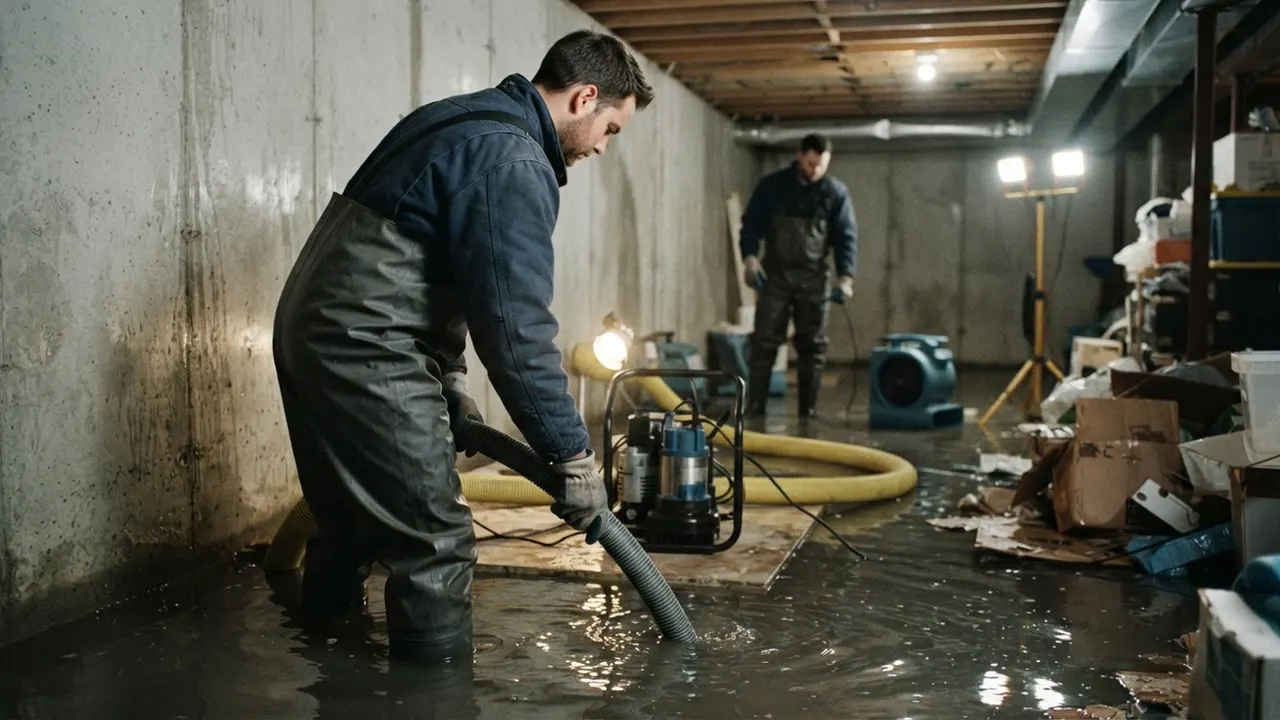
When water covers a large area, reaches finished walls, or returns faster than you can remove it, our crew can pump out the basement, extract water, and set up drying equipment. The appropriate Basement Water Removal Lynn MA work also includes checking how far moisture traveled so wet materials are not left hidden behind stored items or trim.
Common mistakes that make basement flooding worse
In Lynn, temporary cleanup without correcting the water pathway often leads to another flooded basement during the next heavy rain. A quick mop can remove the puddle while leaving wet carpet padding, damp framing, and the drainage fault untouched.
One common mistake is sealing a visible crack before confirming that the exterior drainage is under control. Crack repair can help with a localized entry point, but it cannot manage water pressure against an entire wall or solve a downspout that empties beside the foundation. Another is plugging a floor drain to stop water; if the drain is backing up, blocking it can send water into another part of the basement.
Watch out for these repeat problems:
- Running a household fan over wet carpet without lifting the carpet or checking the pad underneath.
- Using a portable generator, heater, or extension cord in a damp or enclosed basement.
- Painting over a damp wall before the masonry and framing have dried.
- Assuming a sump pump works because it made noise during a previous storm.
Do not mix bleach with other cleaners, and do not rely on bleach to dry porous materials. If sewage or drain water entered the basement, avoid direct contact and keep people out until contaminated water and affected materials are handled safely.
When to call a professional
Call a water-damage professional in Lynn when standing water covers more than a small, contained area, reaches electrical equipment, returns after pumping, or soaks carpet, drywall, insulation, or stored contents. Water reaching finished materials often spreads beyond the visible puddle.
Call promptly if you notice a sewage odor, water emerging through a floor drain, a pump that cannot keep up, or a wall that is bowing or cracking. If you smell gas or see sparks, leave the basement and contact the appropriate emergency service instead of entering to investigate.
We remove standing water, document visible damage, and dry affected areas with commercial air movers and dehumidifiers. Drying commonly takes several days, depending on how much water entered and which building materials got wet; our team checks moisture readings rather than relying on touch alone. We also explain the likely source so you can pair cleanup with the drainage or repair work needed to reduce another flood.
Homeowners dealing with heavy rainfall basement leaks in Lynn Massachusetts often call after a second or third storm exposes the same weak point. Our Emergency Water Damage Restoration Lynn MA service is available for urgent water intrusion, and we can help you decide what needs immediate extraction and what requires a separate drainage repair.
Frequently Asked Questions
Why does my basement flood after heavy rain in Lynn?
Most Lynn basements flood after heavy rain because runoff pools beside the foundation, groundwater rises, or a sump pump or drain cannot keep up. Check downspouts, window wells, floor seams, and the pump first; the exact entry point and timing help narrow down the cause.
Can poor drainage cause basement flooding in Lynn MA?
Yes. Poor grading, blocked gutters, or downspouts discharging near the house can direct roof and yard runoff toward the foundation during a storm. Extending downspouts several feet away and correcting low spots can reduce the load, but recurring water through a wall or floor may need a fuller drainage assessment.
How can I keep rainwater out of my Lynn basement?
Clear gutters before autumn storms, direct downspouts away from the foundation, keep window wells clear, and test the sump pump before forecast heavy rain. These checks take about 15 minutes for many homes and help catch simple failures; they cannot fix groundwater pressure or a damaged foundation by themselves.
When should I call a water damage restoration company?
Call as soon as possible if water reaches outlets, covers a broad floor area, enters finished walls, contains sewage, or keeps returning after pumping. Starting water extraction and drying within 24 to 48 hours helps limit secondary damage, although the correct response depends on the affected materials and water source.
Can repeated basement flooding lead to mold?
Yes. Wet drywall, carpet, wood, and stored paper can support mold growth if they remain damp for roughly 24 to 48 hours or longer. Remove standing water quickly and dry affected materials thoroughly; a musty smell, visible spotting, or recurring dampness warrants closer inspection.
Get help with Water Damage Removal in Lynn
If heavy rain has left water in your basement, water Restoration Pros can remove standing water and dry affected areas while helping you identify the likely source. Call 781-288-8068 for Water Damage Removal in Lynn.